A Modest Proposal for Resolving Global Economic Inequality
According to a recent article in Forbes, the 85 richest people in the world have an aggregate wealth that is equal to the wealth owned by the 3.5 billion poorest people on the planet. This means that the top .000001133 percent of the people are as rich as the bottom 3,500,000,000. Another fact that has been bandied about to push home the polarization point is that the 56.0 percent of the world’s population has a net worth below $10,000; that’s enough money to pay about a month’s tuition at Harvard University if they could gain entrance, which they can’t. And so on, with the statistics. The rich have gotten richer, evidently at the expense of the poor.
That bottom 50.0 percent must be pretty poor. Maybe pissed off too.
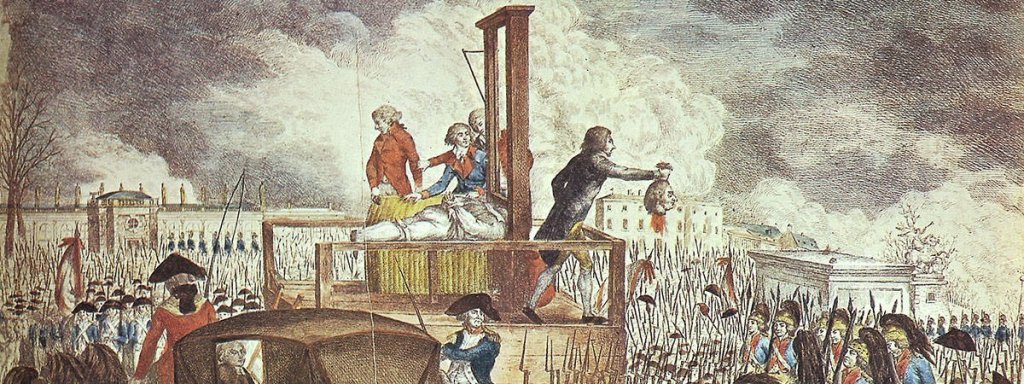
True, we have seen such economic injustice before. Ask Charles I, Marie Antoinette, the Romanovs, and all the other rich people throughout history who, when a certain breaking point was reached, had their overfed bellies gutted and thrown on the scrap heap of history. The immediacy of the problem is evident not only in the extremity of the statistics above but also in the fact that the Have-Nots, if they started to communicate with other Have-Nots, might develop an action plan. Think about 3.5 billion people gathering together on that internet thing and doing the math. 3.5 billion of us. 85 of them. Let’s pay them a visit.
I could just see it now. A rich man, let’s call him Thurston Howell III, looks out his window and remarks to his wife (we’ll call her Lovey) in the adjoining solarium, “Lovey, there are a 3.5 billion people amassed on our front lawn!” To which Lovey would reply, “Oh dear, will you shoo them away? Carlos is coming to sod this afternoon.” Thurston, highball in hand, would storm out of the house yelling “Shoo, shoo!” The 3.5 billion, pitchforks in hand, would stare on, incredulous. Then, fade to black.
So, what to do?
The cynical among us would have us believe that this economic polarity is the natural pendulum of things. Things get worse and worse, the pendulum swings too far in one direction, and then BOOM! The rich get slaughtered, their wealth gets redistributed, the pendulum swings back and the process starts over again. But if there were a way to ease this pressure without the rancor of 3.5 billion people pillaging the houses of the 85, or the 1.0 percent, wouldn’t that be a good thing? I have no special affinity for the 85, but a revolution would be unpleasant for everyone, so if we can come up with a plan which would appease the 3.5 billion poor people, and keep the rich 85 people relatively intact, I think it should be considered.
I have such a plan. This is my modest proposal.
Let’s use the notorious Charles Koch as an example. Most of us know about the Koch family. Charles (86 years old) is the largest remaining shareholder of Koch industries and, with a net worth of $55.0 billion, counts himself as one of the wealthiest 85 referenced above. At one time three other Koch brothers were involved in the family business but they’ve since either passed away or been sued out of existence. Technically, Charles didn’t eat them while in the womb, but, you know, why quibble.
According to the actuarial tables, old Charlie has about 3 years of life left so, by 2025, he’ll have moved on to his statistical reward in heaven, or maybe it would be more prudent to say moved on to his judgment day.
To the small-minded among the 3.5 billion poor, Charles Koch should have more than enough wealth to support himself over the next three years. To consume his $55.0 billion, he’d have to spend $50.2 million per day, or $2.10 million per hour for the rest of his gilded life (assuming he doesn’t ever sleep). To you and me, that’s some high livin’. But to men with the responsibilities of a Koch, that is not a lot of money and there are several conceivable ways in which the money would not last him through 2025. The cost of gardening, piano tuning, flood lights, floor varnish, snow plowing, and sewage for each of his seven homes runs into the many thousands per day. In fact, each of his homes employs one person whose sole responsibility is to keep the cuckoo clocks wound. Each clock winder receives an annual stipend of $38,000, excluding room and board, which are provided (the only alternative would be to break the cuckoo clock winding into three 8-hour shifts, which he decided was more expensive). I think you are getting the idea. Wealth doesn’t come cheap and the fact that it makes no sense to poor people does not mean Charles Koch wouldn’t become destitute over the next 3 years if he’s left to the vagaries of his $55.0 billion.
But what would happen if Charles Koch could be convinced that he had enough money no matter how much he spent or how long he lived? Is there an amount of wealth that, once attained, would force its owner to move his attention away from himself and refocus his efforts and concern to the less fortunate in society? Social scientists and economists have long searched for this tipping point – the point at which those 85 wealthiest people say to themselves, “Gadzooks! This is way too much money. I’m too rich. I need to start giving some of this stuff away.”
If such a tipping point were found the benefits to society and the 3.5 billion would be legion. Instead of shooing poor people from their lawns, the rich would invite the poor in for tea and maybe a game of billiards or a dip in the pool (assuming the po’ folk brought their trunks). In return, maybe some of the poor could hang around and, you know, help Carlos with the sodding. But the rich would go far beyond that. Schools would be built. Hospitals would provide healthcare – the good stuff, not the care you get now. Bridges would be repaired. The list goes on. All this would be afforded by the wealth that is released when the wealthiest among us attain that psychological point when they realize they need to stop accumulating and start divesting.
I am glad to report that recent scientific inquiry has uncovered just that tipping point. Research published by the Bedimptue Foundation[1] shows that once a human being gains access to personal wealth of $100 billion dollars, endorphins kick in which inhibit the self-immersion which enabled the accumulation of wealth and cause a reversal, a letting go of wealth. In short, the mind of a healthy American, given a net worth of $50 billion, $75 billion, or even $95 billion, will say, “More! More! I need more money!” However, once wealth of $100 billion has been reached, a chemical change takes place and the normal American mind will say, “Enough! Stop with the money! I need to start giving money away!” Needless to say, these findings are a watershed in human history.
Scientists do not know precisely why the tipping point is $100 billion or if the $100 billion is in constant dollars and will need to be adjusted for inflation as times passes. Further research is needed. But now, for some reason, we have discovered through peer reviewed research that $100 billion dollars, for one man, is indeed without qualification or exception, enough money. So, if you are really rich, and some greedy relative sidles up to you at a family reunion and says, “Hey Thurston! Honest to God, how much is enough?” you can now honestly respond, “Uhmmmm, $100 billion.”
Armed with these findings I will make a bold, but modest, proposal. I propose that the United States Federal Government issue a check to Charles Koch for $45 billion dollars. No taxes would be owed on the money. The money would be given in cash, without strings, and without remorse. The $45 billion grant would be paid for by increasing taxes on the poor. Charles would only be obliged to cash the check and deposit the money into his savings account.
I know what you’re thinking. This makes no sense. Why give even more money to people who have so much money when so many people have none? Yes, it is counterintuitive and it appears wasteful on the surface. But recent research suggests a taxpayer funded effort to bring Charles Koch (and all his fellow billionaires) up to the $100 billion mark is worth the risk. Their resultant largesse would yield dividends well above the investment.
This is how it works. Upon realizing he is worth $100 billion, Charles would become self-aware and question the dignity of retaining so much wealth. This would lead to a heightened awareness of the lower 50.0 percent, those 3.5 billion humans who have no consistent means of feeding or sheltering themselves. Here is a list of some of things Charlie would do if he woke up one day found out he had $100 billion:
- Encourage the politicians under his control to vote for an increase in the minimum wage to $15.00 or even $15.25 per hour. If the politicians reject his request, Koch could fire them.
- Overhear you ordering the flank steak at the Wichita Steak & Sea and yell, “Hey stranger, why don’t you order the ribeye? I’m buyin’!”
- Buy the United States Postal Service from Louis DeJoy and order them to deliver mail again
- Build a swimming pool for every citizen of Flint, Michigan and fill each of them with fresh water
- Buy new trains for Amtrak (every week)
- Pay for Trump supporters to finish high school
You get the point.
Having said all this though, maybe all the doubters out there are right. Maybe the research is flawed. Maybe it’s all nonsense. Maybe there is the possibility that Charles will just cash his $45 billion government check and make no effort to invest in the community around him. As a cynic once said, ‘It is easier for a Mexican gardener to pass through the eye of a needle than for a rich man to enter the Kingdom of Heaven.’ Let’s say Charlie Koch opens his mail, sees the check, and says, “Cool. More for me. I’m rich, I’m rich, I’m rich!”
Here is the best part of this whole plan. If Charles doesn’t see the light, the world economy would still benefit. Imagine you’re Mr. Koch. You have $55 billion. You get a check for $45 billion. Now you have $100 billion. You don’t often think about it (who does?) but you know that at the most you only have another three years on the planet and you can’t take it with you.
You know a couple of things up front. You’re not going to give any money to the poor starving parasites on your lawn. What good would that do? If you give them a free meal today it only ensures they will be back on your lawn tomorrow looking for more handouts. They’re like dogs after they get a treat. What dog gets a treat, says, “thank you” and then goes and lies down with a sense of fulfillment? None. They are right back at you drooling on your knee for another treat.
You definitely don’t raise anyone’s salary to a livable wage. That makes zero sense. You give a man a raise and just like the starving parasites, he’ll be happy for a week and then be at your door looking for another raise. Better to pay him below the poverty line and keep him thinking that his existence is expendable.
And you definitely don’t start worrying about the earth’s atmosphere killing your grandchildren. If a grandchild dies and you’re not there to hear him scream, does he make any noise? Ask any philosopher. The answer is no.
What does a Koch with three years left do with his $100 billion? Start spending baby. Spend long and spend big. Here’s some more math. A Koch who has $100 billion dollars and three years to live would have to spend $3.8 million every hour for the rest of his life to spend all his money. And that’s assuming no interest. If you assume the balance is growing, then, you know, it’s even more.
The question is how does Charlie Koch spending $3.8 million an hour help the rest of us? Well, consider how difficult it would be to spend $3.8 million an hour every hour for the next 3 years. And remember, there’s no cheating. He can’t give any of it away. No food for parasites. No funding of climate change research. Forget about breast cancer and mosquito nets. Under this scenario, Charles decides to spend the whole kitty on himself. In the eventuality his $100 billion does not make him self-aware, here is what Charles would do.
First, sailboats. And I don’t mean he goes out and buys one sailboat. He buys as many sailboats as there are docks in the United States. That’s like thousands of sailboats. That way, no matter where he goes, he’s always going to have a sailboat within walking distance (unless he goes to the Mojave Desert). Let’s say Charlie goes to Savannah, Georgia on business and at the end of the day he says to a local, “You know, today would be a good day to go sailing.” So the local says to him, “Oh, do you have a boat? Where is it docked?” Charlie would say back to him, “I don’t know. Where’s the nearest dock?”
Think of the employment. Sailboat factories would spring up everywhere there is water and lots of places there is no water. All those unemployed middle class office workers could be put to work making sailboats. Have you ever seen the look on the face of a jobless man when you tell him, “Guess what? You now have a job painting hulls for Charlie Koch.” It’s something you’ll never forget. Priceless. And the economists will tell you that it doesn’t stop at sailboats.
There would be full employment in the buoy manufacturing industry. You add 20,000 boats to the nation’s estuaries and you’re going to need some more traffic lights. And buoys don’t grow on trees; tradesmen have to make them and make sure they float. And if there’s 20,000 more boats, there’s 20,000 more cabin boys, galley cooks, first mates, captains, and stevedores. Crewing these boats will add 100,000 more jobs itself. Plus, there’s 84 other billionaires buying sailboats all over the world. Economists estimate that if you strung all the new sailboats end to end, you’d have a string of sailboats that went from Earth to Uranus and back again.
Again, you get the point. Sailboats would only be the beginning (probably only about three weeks’ worth of spending). There will need to be planes, fancy cars, home furnishings, cookbooks on how to roast endangered species, silk ties, the latest in home electronics, and so on. With only $55 billion, the poor version of Charles Koch probably did his own cooking and lawn mowing. With $100 billion, he can afford to hire people to do those things for him. That’s right. More jobs. And each time he buys a new house, which would be, like every other day, he’ll need to buy another lawnmower and another guy to ride the lawnmower. And we haven’t even started talking about the cuckoo clock industry.
Either way, we’re looking at full employment and reasonable wages for those 3.9 billion people (50,000 poor babies were born to the 3.85 billion in the time it took you to read this essay) on the bottom.
You know it. This idea makes sense. Let’s give our money to the rich. It’s for our own good.
John Barton
[1] “How much is enough?”, Journal of Neurological Cash Flows, December 2021, Volume 9, pge.56-84.

 The D'Town Essays
Leave a comment